

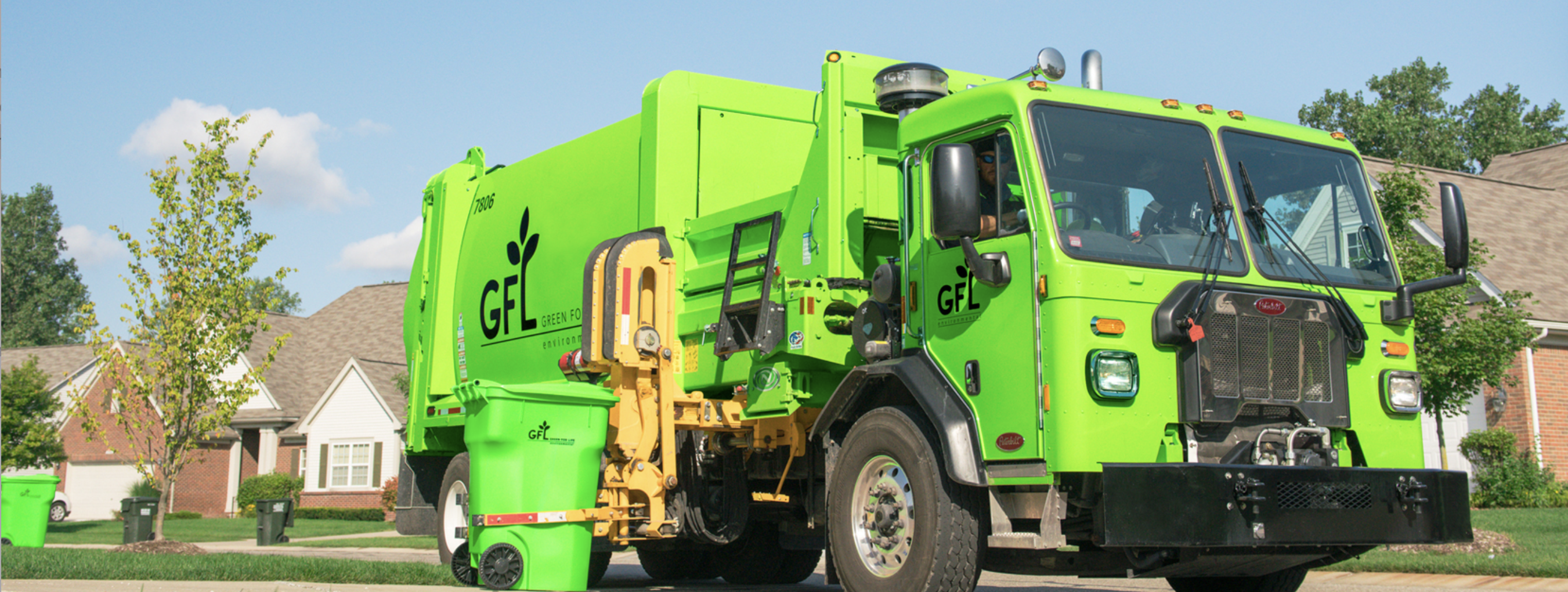
Rolling Fork Trash & Recycling Services
GFL Environmental
Trash collection days are Monday and Thursday. Recycling is collected on Thursdays. Service hours are between 7:00 am and 6:00 pm on each scheduled pickup day.
Residents are encouraged to have all trash, recycling, yard waste, and bulky items properly placed for collection before service begins. Collection times may vary, so items should remain out until the end of the service day if they have not yet been picked up.
Trash Collection
Household Garbage
Household garbage includes waste generated inside the home. This does not include construction debris, remodeling debris, hazardous materials, contractor-generated waste, or other excluded items listed below.
Household garbage is collected from the garage door area. Garbage containers must be placed at the end of the driveway in plain sight from the street. Service behind gates is not available. The maximum container size is 40 gallons.
All household garbage should be secured in containers or bags that can be safely lifted and collected. Containers, bags, or bundles should not exceed 40 pounds.
Placement Guidelines
To help ensure safe and efficient collection:
-
Place containers where they are visible and accessible from the street.
-
If placing a trash can or recycling bin at the curb, position the wheels facing the house and the lid opening toward the street.
-
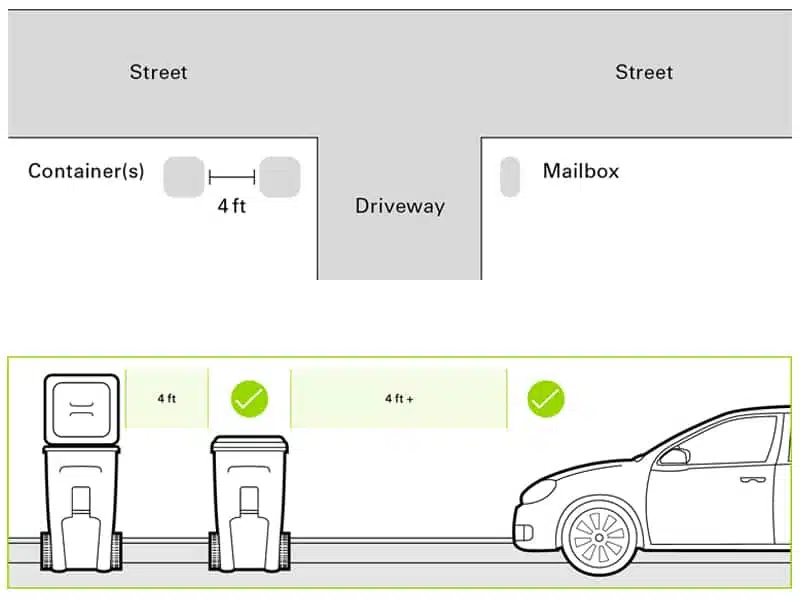
Keep trash and recycling containers at least four feet apart.
-
Keep containers at least four feet away from mailboxes, parked vehicles, light poles, power lines, and other obstacles.
-
Leave containers out until the end of the collection day if service has not yet occurred.
-
Check HOA rules for any restrictions on how early containers may be placed out and when they must be brought back in.
Permanent trash containers will be returned to their point of origin after being emptied, in the same condition in which they were taken, except for normal wear and tear.
Tree & Yard Waste
Tree and yard waste must be placed at the curb area of each residence.
Trees, shrubs, brush trimmings, and fencing must be bundled in lengths no greater than 4 feet. Branches should not exceed 3 inches in diameter. Bundling is required to allow for quick pickup and to help prevent damage to collection equipment.
All residential waste materials must be placed in containers not exceeding 40 gallons, bags, or bundles weighing no more than 40 pounds.
Bulky Items
Bulky items must be placed at the curb area of each residence. Items such as appliances, furniture, flattened cardboard boxes, and carpet may be collected on either trash service day.
Carpet is limited to up to one room and must be rolled, no more than 4 feet wide, and weigh less than 50 pounds.
Refrigerators, freezers, and any other items containing Freon must be drained of Freon before collection. A bill or service receipt must accompany the item to verify that the Freon removal was properly completed, as required by federal law.
Excluded Items
The following items are excluded from normal trash collection:
-
Dirt
-
Rocks
-
Bricks
-
Concrete
-
Tires
-
Batteries
-
Motor oil
-
Cooking oil
-
Waste generated by a private contractor
-
Hazardous materials
-
Any other materials deemed unsafe or unacceptable for regular residential collection
If an item cannot be collected, a tag may be left explaining the reason it was not picked up.
Spillage
The collection provider will clean up spillage that occurs during the collection or recycling process. However, if gasoline, motor oil, paint, cooking oil, or any other liquid is placed in a container and is not visible to collection personnel, the provider cannot be responsible for stains or damage caused by that spilled material.
Holidays
When a regular pickup day falls on New Year’s Day, Thanksgiving Day, or Christmas Day, collection will be made on the next regularly scheduled pickup day.
Recycling
Recycling helps reduce waste sent to landfills by separating reusable materials so they can be processed and repurposed. Accepted materials can vary by location, so residents should follow local service guidance whenever available.
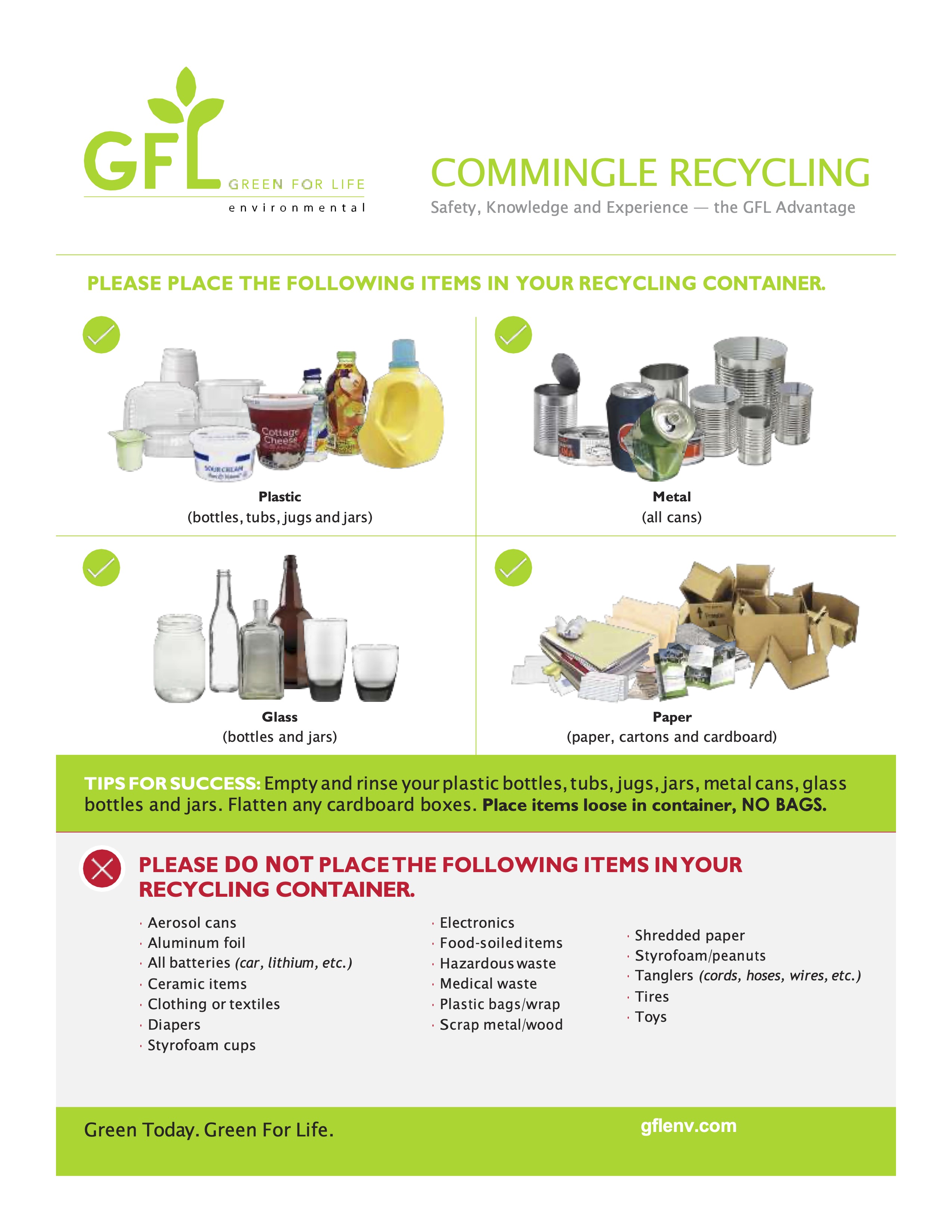
To help prevent contamination, recyclable items should be empty, clean, and dry before being placed in the recycling container. Food residue, liquid, grease, plastic bags, and non-recyclable materials can interfere with the recycling process.
Recycling
Usually Accepted Recycling Items
Paper
Acceptable paper items generally include:
-
Newspaper and inserts
-
Magazines and catalogs
-
Junk mail
-
Envelopes, including envelopes with windows
-
File folders
-
Office paper and notebook paper
-
Computer paper
-
Brown paper bags
-
Paperback books
-
Coupon books
-
Index cards
-
Calendars
Cardboard
Acceptable cardboard items generally include:
-
Corrugated cardboard boxes
-
Shipping boxes
-
Cereal boxes
-
Dry food boxes
-
Shoe boxes
-
Tissue boxes
-
Moving boxes
-
Detergent boxes
-
Soda cartons
-
Paper towel rolls
-
Toilet paper rolls
All cardboard boxes should be flattened before being placed in recycling.
Plastics
Acceptable plastic items generally include clean plastic bottles and jars labeled #1 through #7. Examples may include:
-
Soft drink bottles
-
Water bottles
-
Milk jugs
-
Juice containers
-
Detergent bottles
-
Clean plastic jars
-
Flattened cartons, where accepted
Check the bottom of the container for the recycling symbol and number. Items should be empty and clean before recycling.
Metal
Acceptable metal items generally include:
-
Aluminum cans
-
Tin cans
-
Steel food containers
-
Aluminum foil
-
Pie pans
-
Baking pans
-
Metal lids
-
Empty aerosol cans, where accepted
All metal food containers should be clean of food before being placed in recycling.
Glass
Glass recycling may vary by location. Where accepted, glass items usually include clean bottles and jars. Lids should be removed and separated, and all food or liquid should be cleaned out before the item is placed in the recycling container.
Because many areas no longer accept glass in curbside recycling, residents should confirm local guidance before including glass.
Items That Should Not Go in Recycling
The following items should not be placed in recycling:
-
Styrofoam
-
Plastic bags
-
Shredded paper
-
Food waste
-
Yard waste
-
Grease-soaked cardboard
-
Paint cans
-
Chemical containers
-
Motor oil containers
-
Electronics, including TVs and computers
-
Monitors
-
Window glass
-
Mirrors
-
Ceramics
-
Dishes
-
Scrap metal
When in doubt, leave the item out of the recycling container to help avoid contamination.








RECENT NEWS