







New World Screwworm Confirmed in Medina County: What Livestock Owners, Pet Owners and Residents Need to Know
A confirmed case of New World screwworm (NWS) in Medina County has prompted state officials to impose animal movement restrictions in parts of Medina, Bandera and Uvalde counties, marking a significant development for South Texas ranchers, livestock producers, veterinarians and animal owners.
While only one confirmed case has been identified in Medina County, state and federal officials emphasize that early detection and rapid reporting are critical to preventing the parasite from becoming established in Texas. For Medina County's agricultural community—where cattle, horses, sheep, goats, wildlife and other livestock play an important role in the local economy—the announcement serves as an important reminder to closely monitor animals for signs of infestation.
According to the Texas Animal Health Commission (TAHC), New World screwworm was detected in a bovine in Medina County on June 23, leading officials to designate portions of Bandera, Medina and Uvalde counties as Infested Zone 09 and immediately implement a quarantine with animal movement restrictions.
What is New World Screwworm?
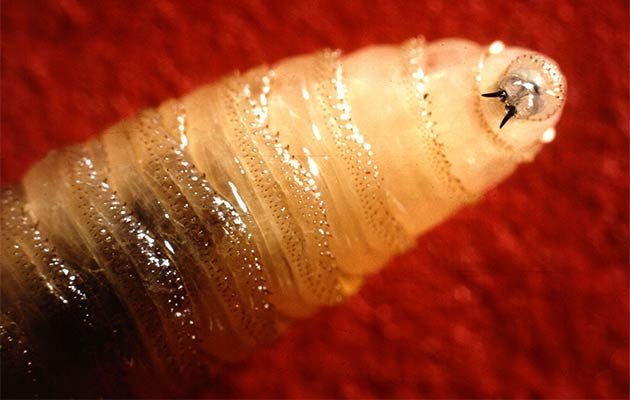
Despite its name, the New World screwworm is not actually a worm. It is the larval stage of the New World screwworm fly (Cochliomyia hominivorax), a parasitic blowfly whose larvae feed on the living tissue of warm-blooded animals.
Unlike common maggots that consume dead tissue, screwworm larvae invade healthy, living flesh. Female flies lay eggs in open wounds or natural body openings, where the larvae hatch and burrow deeper into tissue using sharp mouth hooks. Left untreated, infestations can become severe, leading to painful wounds, secondary infections and, in some cases, death.
The parasite primarily affects:
- Cattle
- Horses
- Sheep and goats
- Wildlife
- Pets
- Birds
- Humans, in rare cases
Why This Matters in Medina County
Agriculture remains one of Medina County's defining industries, with ranching and livestock production supporting families and local businesses throughout the region.
Although officials stress there is currently only one confirmed case in Medina County, the detection has triggered heightened surveillance and precautionary measures designed to stop the pest before it spreads further.
The Texas Animal Health Commission has placed Infested Zone 09 under quarantine. Under the emergency order:
- Warm-blooded animals within the quarantine zone cannot be moved outside the area without prior approval from the Commission.
- Animals leaving the zone must first be inspected, treated if necessary and issued movement documentation by a Commission representative.
- Hides, carcasses and animal parts capable of carrying screwworm must also be inspected before removal.
- Unauthorized movement of animals may result in administrative penalties or criminal prosecution.
First Texas Detection Since the Pest's Return
Earlier this month, the Texas Parks and Wildlife Department (TPWD) announced Texas' first confirmed New World screwworm detection since the parasite began moving north from Central America in 2023. The initial Texas case was identified in a calf in Zavala County on June 3.
State agencies, including TPWD, TAHC and the U.S. Department of Agriculture (USDA), continue working together on surveillance, containment and response efforts.
Dr. David Yoskowitz, Executive Director of the Texas Parks and Wildlife Department, said, "NWS can have devastating impacts on free-ranging wildlife populations and rural communities."
Dr. Bud Dinges, Texas Animal Health Commission State Veterinarian and Executive Director, added, "TAHC has been actively preparing for a resurgence of NWS for over two years. We are putting these preparations into action, and we encourage all animal owners and caretakers to continue to remain vigilant for the presence of larvae in animal wounds and immediately report any suspicions."

How Texas Successfully Eliminated Screwworm Before
While the discovery is concerning, experts note that Texas has successfully defeated New World screwworm before.
The primary tool is the Sterile Insect Technique, in which millions of sterile male screwworm flies are released into affected areas. Because female screwworm flies mate only once, breeding with sterile males prevents future generations from developing. Combined with surveillance, quarantines, wound treatment and public reporting, the technique eradicated the pest from the United States during the 1960s and remains the only proven long-term eradication method.
Targeted sterile fly releases are now being expedited in response to the recent Texas detections.
What Livestock and Pet Owners Should Watch For
State officials encourage anyone who owns livestock, horses or pets to routinely inspect animals for:
- Open wounds that fail to heal
- Maggots or larvae present in wounds
- Swelling or foul-smelling wounds
- Animals showing signs of pain or irritation around injuries
- Lesions around the ears, nose, mouth, navel or other body openings
Animal owners should keep wounds clean and protected and seek veterinary care immediately if they suspect an infestation.
If New World screwworm is suspected in livestock or domestic animals, owners should not move the animal and should immediately contact the Texas Animal Health Commission for reporting instructions.
Wildlife concerns should be reported to the Texas Parks and Wildlife Department, while suspected human infestations should be reported to the Texas Department of State Health Services (DSHS).
Food Supply Remains Safe
The USDA has emphasized that the current situation does not affect the safety of the nation's food supply. The U.S. Department of Agriculture's Food Safety and Inspection Service continues to ensure commercial meat, poultry and egg products remain safe for consumers. New World screwworm does not infest fruits, vegetables, grains or other plant-based food products.
What Happens Next
For Medina County residents, especially ranchers and livestock producers, the weeks ahead will focus on continued monitoring, rapid reporting and preventing additional spread.
State officials have created a dedicated New World Screwworm Resources website where Texans can learn how to identify the parasite, recognize symptoms, report suspected infestations, review confirmed cases in Mexico and access the latest response information.
As Texas agencies continue their coordinated response, officials say community awareness and prompt reporting remain among the most effective tools for protecting livestock, wildlife and the state's agricultural economy.
Residents can learn more by visiting screwworm.gov and following updates from the Texas Animal Health Commission, Texas Parks and Wildlife Department, and Texas Department of State Health Services.
Stay with My Neighborhood News for continued updates affecting Medina County and public safety.

 Tiffany Krenek has been on the My Neighborhood News team since August 2021. She is passionate about curating and sharing content that enriches the lives of our readers in a personal, meaningful way. A loving mother and wife, Tiffany and her family live in the West Houston/Cypress region.